Every
year, August 9, is celebrated as the International Day of Indigenous
people in various parts of the world to recognise the immense
contribution done by their ancestors in enriching the cultural and
social aspects of our society and the role played by them in
protecting and developing the land for the agricultural and
horticultural crops since the hoary past.
Poverty,
illiteracy, discrimination, financial instability and inequalities
have been responsible for causing numerous hurdles in their path of
development for the long period and due to this, they became
repeatedly victims. In the United States of America, once the native
Americans were attached to their land, culture and languages However,
today they and their culture along with languages have been
threatened. That is why,by celebrating the International Day of
Indigenous people, it is the bounden duty of the Americans to
recognise and respect them. Celebrating the invaluable contribution
and respecting the sovereignty of the Natives, Americans are doing
ideal work.
In
the small state of Goa, one can experience the wonderful diversity of
human culture, as this land has been connected from the ages to a
wide range of communities coming from the Indian subcontinent and the
world over for trade, commerce and business activities as well as
understanding the land and culture.
Known
as the Konkan kashi , during the ancient period and the Rome of the
East under Portuguese rule, the natural beauty of the land of Goa
always mesmerized the people coming from the distant regions.
Though
several attempts had been made by the erstwhile Portuguese government
to destroy the indigenious culture and traditions, it did not gain
success in uprooting them. On December 19, 1961, the government of
India through the Vijay operation liberated the Goans from the yoke
of the oppressive Portuguese rule. After liberation for the long
period Goa, Daman and Diu remained as the Union Territories and in
1987, Goa attained statehood. However, to recognise the indigenous
people of the land, meagre efforts were made by the successive
governments that came to power.
Under
the banner of GAKUVEDH organisation, the indigenous people of land
began the movement for their recognition as the scheduled tribes of
Goa. Gauda, Kunbi, Velip and Dhangar communities by joining their
hands together spearheaded the struggle.
On
July 21, 1995, then MLA, Antonio D. Gaunkar, moved a private members
resolution, recommending the government of Goa, to urge the central
government to declare Gauda, Kunbi, Dhangar and Velip communities as
the Scheduled tribes of Goa. Subsequently, the said resolution was
passed in 2003. However, the Gauda, Kunbi and Velip were notified as
the Scheduled tribes of Goa, excluding the Dhangar.
Since
the hoary past, Goa's forest and sea biodiversity has provided an
ideal home for the tribal communities, where vegetation shows
variation from the tropical evergreen to mixed deciduous forest. Due
to this, Goa has been providing an ideal environment for agriculture
and pastoralism that has helped tribes to live happy lives.
The
social organisation of the tribes in Goa constitutes distinct,
endogamous groups in which the kinship was important and were
politically functional as the autonomous units. They have their own
general for settling the disputes. They are basically the nature
worshippers; their deities are aniconic, represented by stones, ant
hills, trees and other forces of nature.
Worshipping
various natural entities has been given importance inside the
forests, on hills by them since ages. Traditionally, they have been
worshipping Mallikarjun, Somnath, Ramnath, Chandreshwar, Sateri,
Kamakshi, Betal, Ravalnath… and varied forms of the folk deities
associated with water, soil and forest.
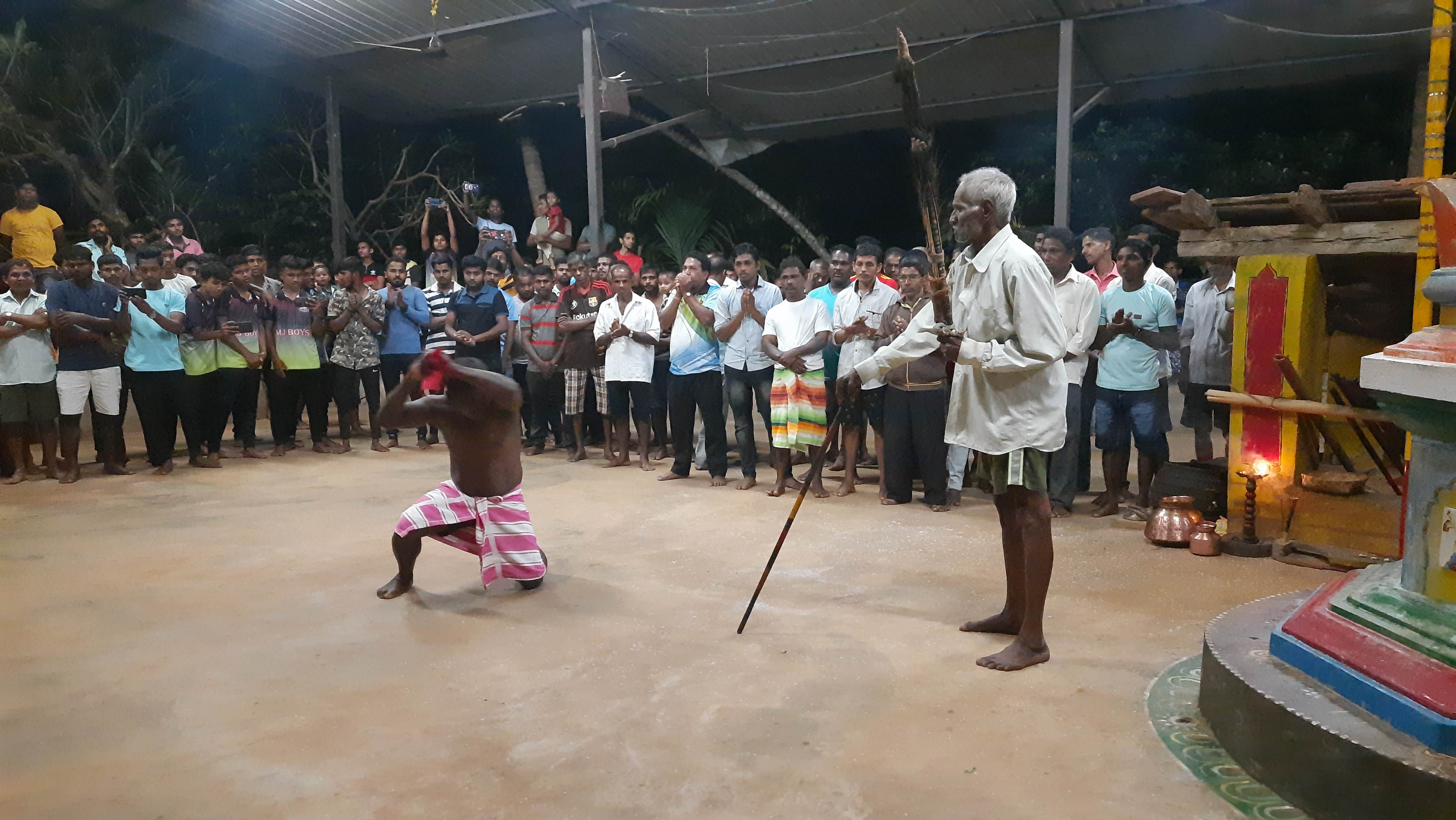
For
the male tribal folk, Shigmo is the most popular festival wherein a
variety of folk dances along with folk songs are performed to the
tune of the folk musical instruments. The rich tradition of the folk
dramas like Gauda Jagor, Ranmale showcases the socio-ecological and
cultural heritage inherited from the generations. The women expresses
their skills of dance, drama, singing through the eco-feminist
festivals of Dhalo, Katyo and Dhillo.
During
the past, these communities were predominantly involved in
agriculture and horticulture that relied on the vagaries of nature
and that's why,they are expressing gratitude to the elements of
nature through the festivals and rituals.
As
they are generally characterised by long narrow head, broad nose,
medium long face, short height and dark complexion, they are said to
belong to the Proto-Australoid race and had migrated from Chota
Nagpur region of the Central India. The technical skills inherited by
them of domesticating animals, growing cereals and planting crops by
digging soil with tools and implements helped to enrich the
agro-horticultural heritage of the land.

They
through observation developed the engineering skills by which they
reclaimed the coastal and riverine land and successfully built bandhs
to control the saline water. Through experiences developed the salt
tolerant varieties of paddy, their staple diet of fish, curry and
rice along with seasonal fruits and vegetables provided nutritional
supplements. For smooth functioning of the village administration,
they laid the foundation of Gavpon, where the man with immense
traditional wisdom was designated as the Budhvont, a person having
religious as well as cultural knowledge became the Velip and Jalmi.
Gaonkar enjoyed the status among the village elders.
During
Portuguese rule, the tribal communities were forced to convert to the
Catholic religion, who are known as the Catholic Gaude. On 23
February, 1928, many Catholic Gaude under the shuddhi movement
launched by vinayak Maharaj Masurkar were taken into Hinduism, who
developed into an endogamous community known as the Nav-Hindu Gaude.
In
1962, Gomantak Gaud Maratha Samaj organisation was established to
assert their rights and identity. In 1968, Goa Land Revenue Code was
enforced, but very few could get possession over agricultural land
that they were cultivating for generations.
In
1980, the united efforts were made by the federation of Gauda, Kunbi,
Velip and Dhangar and eventually Gauda, Kunbi and Velip were included
in the list of the Other Backward Communities in 1987. In 2003, the
Central Government included Gauda, Kunbi and Velip in the list of the
Scheduled tribes.The Scheduled tribes and other traditional forest
dwellers (Recognition of Forest Rights) Amendment Rules, 2013 were
introduced.

However,
to enhance the social, economic, political conditions of the tribals
sincere efforts are needed in Goa. Through their age -old practices,
they are displaying the socio-cultural heritage deeply rooted in
environmental ethics. The Sluice gates installed by them once
restrained successfully the saline water. The erection of the bunds
protected the Khazan agriculture land and provided foods to
innumerable families. Tradition of Mange thapani, a festival of
worshipping the effigies of crocodile and the inheritance of
community conserved areas like the sacred groves, sacred tanks,
sacred trees throw light on the linkages of them with the
environment, wildlife and ecology and how, they were concerned about
the protection and conservation of the natural resources by making
the sustainable use.
The
Dhangar community of Goa, though they display tribal traits and are
earning their bread and butter through the rearing of buffalo and
goat, their movement, so far has not gained success to accord them
the tribal status.

Hardly
few enjoy the possession over the cultivable lands for doing the
agricultural and horticultural crops. Various hurdles are
continuously affecting the crop productivity. Sources of livelihood
are not satisfactory enough to meet their basic needs. The mining
activities are also responsible for destruction and degradation of
the fertile land.
August
9, is celebrated as the World Indigenous People Day to recognise and
safeguard the rights of them. In Goa, there is a need to take
necessary steps for protecting the eco-cultural heritage and
providing impetus for encouragement of their skills and talents.
Their
tangible and intangible cultural assets engrossed in traditions,
customs display the intimate and lasting relationship with the
surrounding nature. When appropriate forum and boost up is given for
expressing the artisans and artists talents, Goa,s aboriginal culture
and heritage will certainly be able to show the potentiality.
Identifying and acknowledging the native land and honouring their
socio-cultural contribution will enable them to get happiness.
The
Christian Gaude women continued even after several years of
conversion in villages of Quepem the tradition of Dhalo whereas the
men folk through the Intruz performed the folk dances reciting songs
inspired by the epic Mahabharata.